
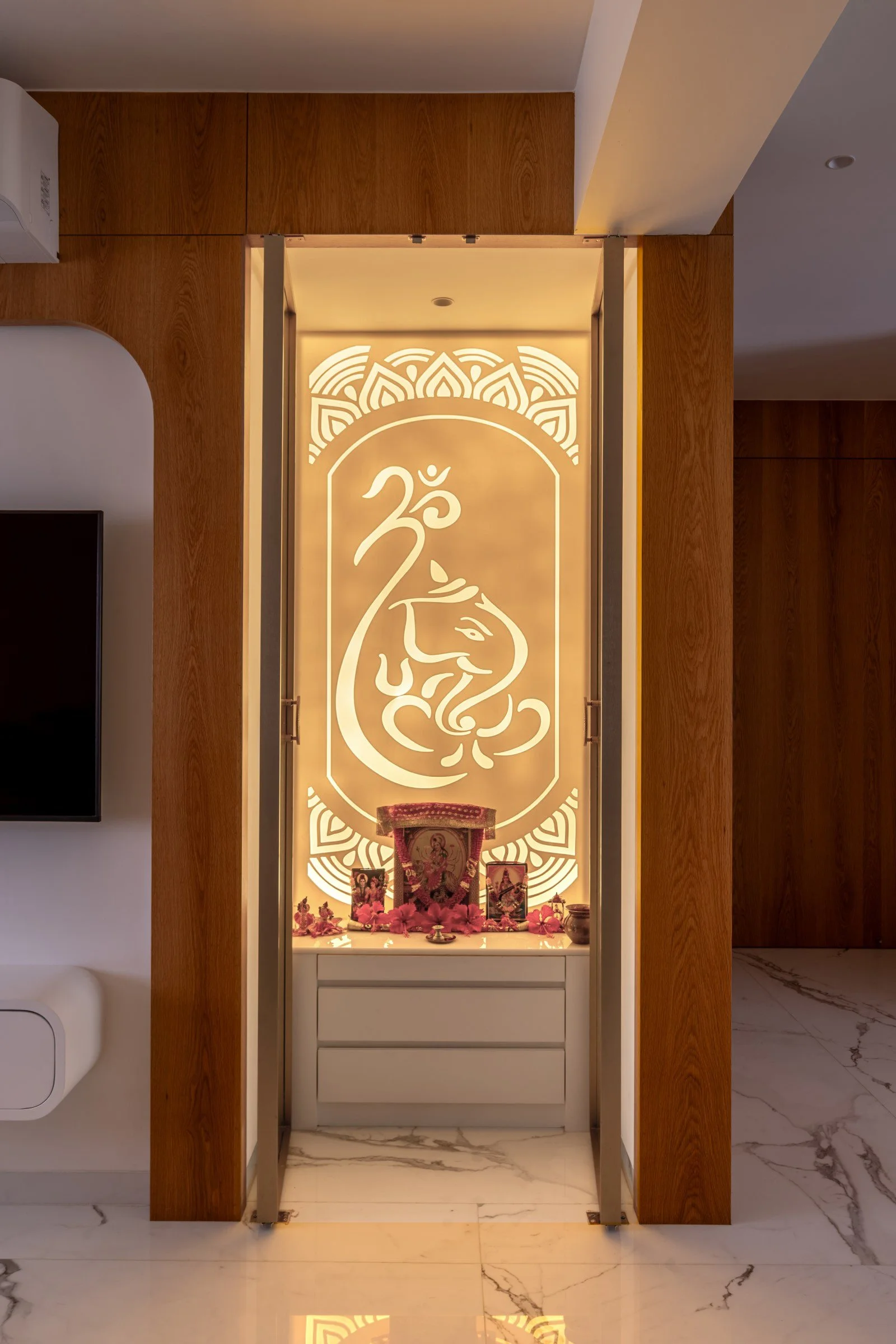
Pooja room design in home is one of the most personal choices in an Indian house, and it works at any size. A full prayer room, a wall niche in the hall and a compact cabinet beside the TV can each feel complete when the proportions, lighting and materials are right.
This guide collects 25 pooja room ideas, with a focus on small spaces, because most flats do not have a spare room to give to a mandir. You will find ideas by space, by style (including modern pooja room design), by material and by wall or door treatment, followed by Vastu basics, lighting, storage, costs and the mistakes we see most often.
Quick Picks
| If you want | Look at idea |
|---|---|
| The smallest footprint | 1 (wall-mounted mandir) and 3 (wall niche) |
| A pooja space in the living room | 7 (partition unit) and 8 (beside the TV wall) |
| A clean, modern look | 11 (modern minimal pooja room) |
| A traditional look | 12 (carved wood) and 13 (temple style) |
| A long-lasting, low-maintenance material | 17 (marble) and 21 (stone or solid surface) |
| A statement design | 16 (luxury onyx and brass) and 23 (backlit stone panel) |
Small Pooja Room Design for Home (Ideas 1 to 6)
If your flat is compact, start here. Small pooja room design depends on using vertical space and keeping the surroundings simple, so the mandir stays the focus.
1. Wall-mounted mandir
A floating unit fixed to the wall at roughly chest height frees the floor and keeps the idols above the level where people walk. Choose a shallow depth that fits your idols, with a solid shelf for the main deity and a second shelf for lamps and offerings.
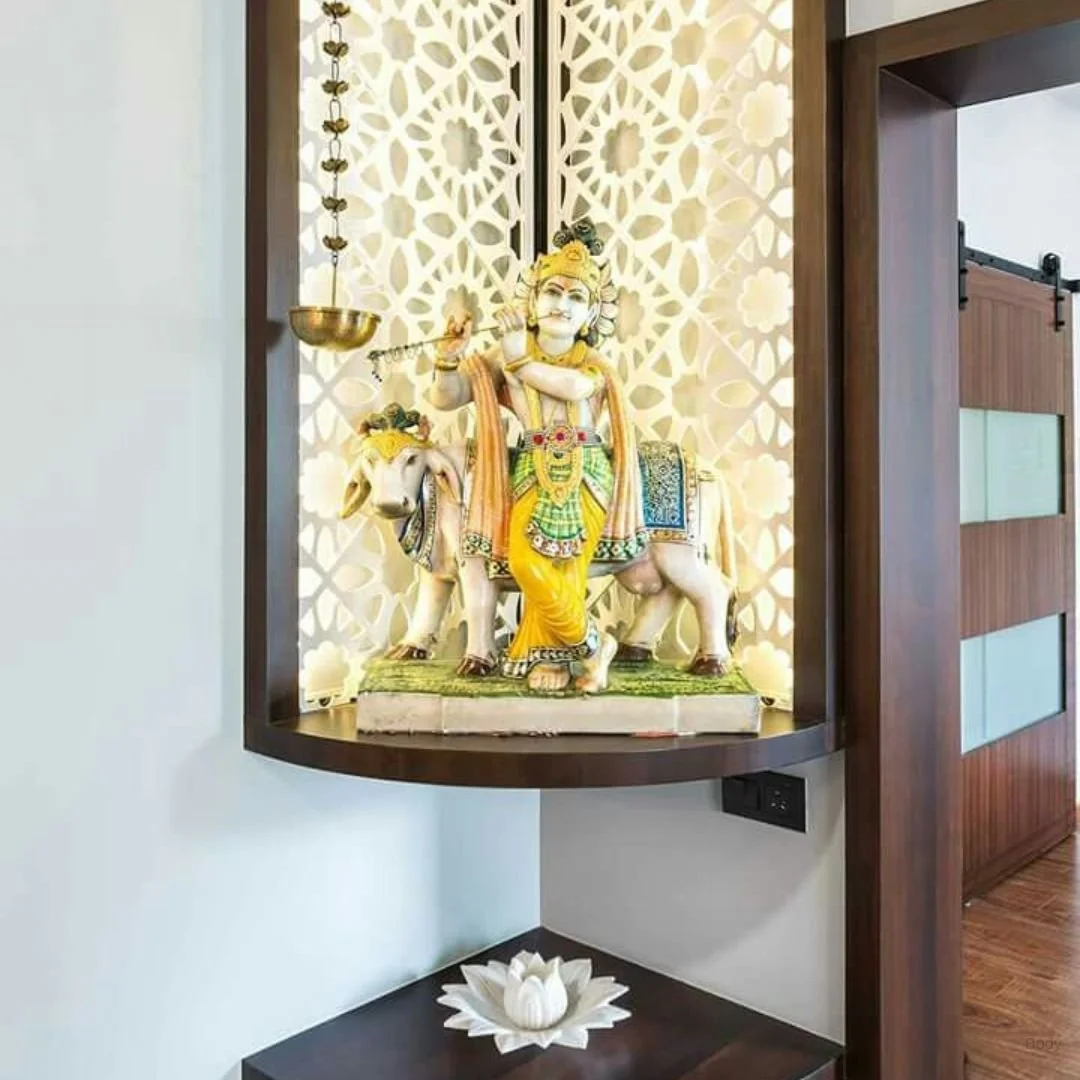
2. Corner pooja unit
A corner makes use of dead space. A unit with two angled sides keeps the idols visible from the room while tucking the cabinet away from the main walkway. This works especially well in the north-east corner of a hall.
3. Wall niche mandir
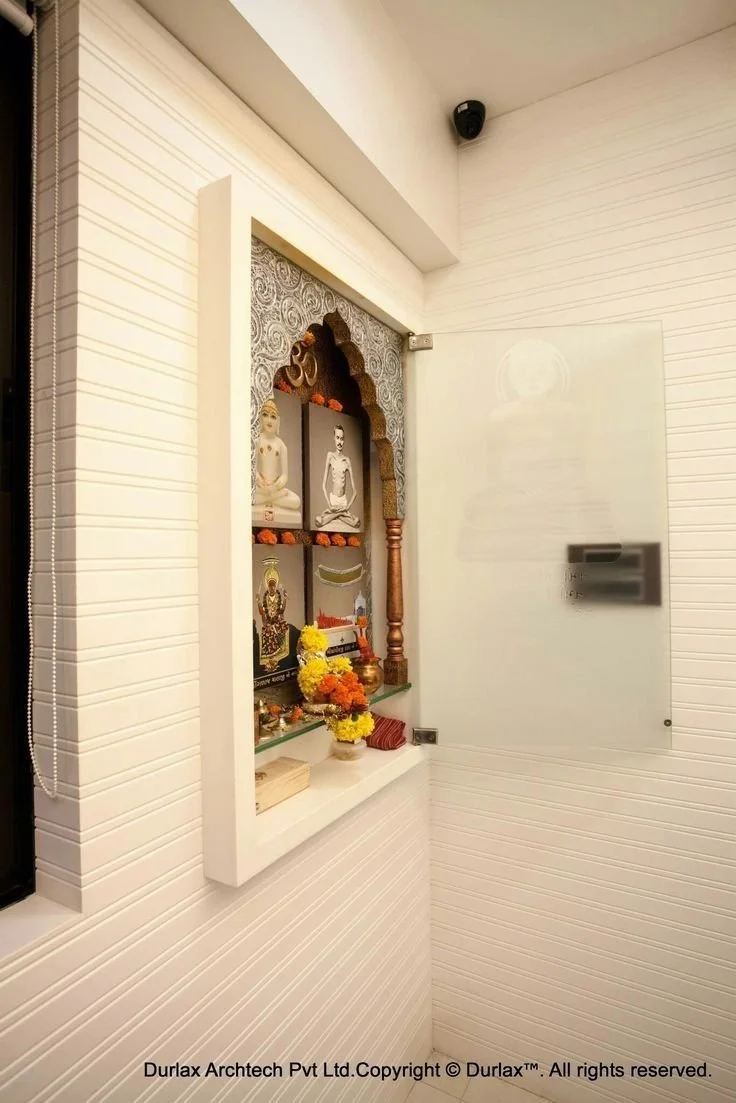
If you are renovating, a recessed niche in a non-structural wall takes no floor or wall depth. Finish the inside with a contrasting panel, add a concealed light at the top and frame it with a simple border in wood or stone.
4. Under-staircase pooja space
In duplexes and bungalows, the area below the stairs is often wasted. Many Vastu followers avoid this spot, so consider it only if it suits your beliefs and the ceiling height is comfortable for standing prayer.
5. Shelf-style mandir in the living room
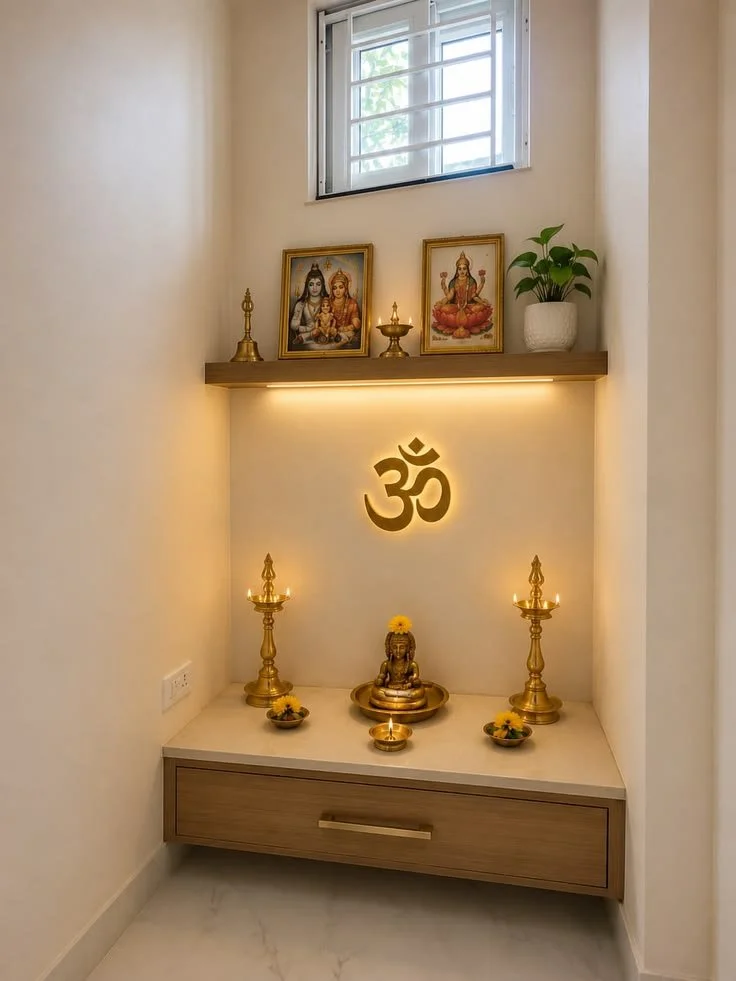
A simple, well-proportioned shelf unit in the living room can hold idols, lamps and a small storage drawer below. Keep the surrounding wall plain so that the pooja shelf reads as a deliberate design feature.
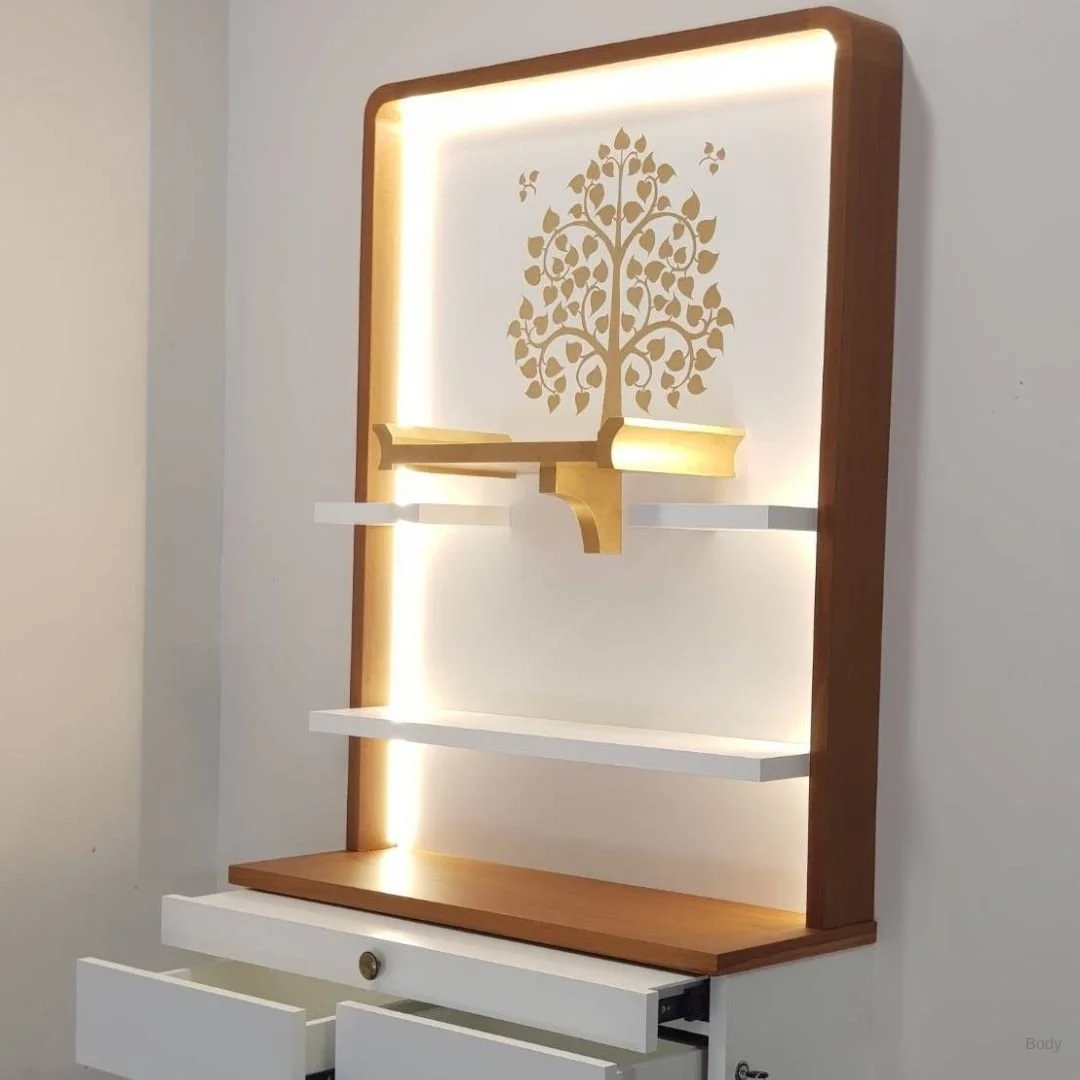
6. Closed-door cabinet mandir
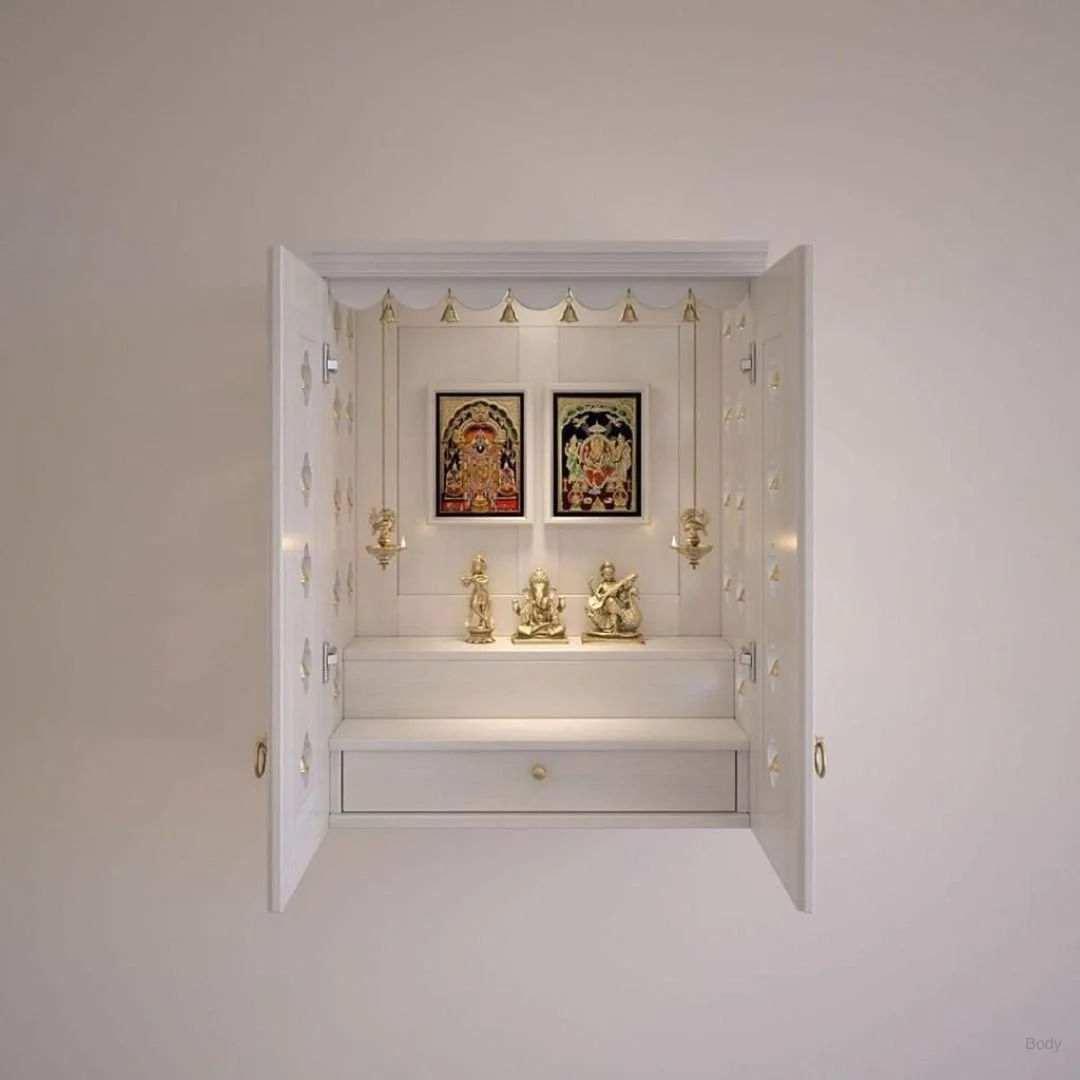
A cabinet with folding or sliding doors lets you close the pooja area when you are not praying, which suits open-plan homes and families who prefer privacy. Add ventilation slots so incense smoke does not collect inside.
Pooja Room Design in Hall and Living Areas (Ideas 7 to 10)
When there is no separate room, the hall becomes the pooja space. These ideas keep the mandir central without letting it clash with the living room design.
7. Partition-style pooja unit
A slim partition with the mandir on one side and storage or display on the other can separate the entrance from the living area. It brings privacy and gives the pooja space its own presence.
8. Pooja unit beside the TV wall
Placing the mandir next to the TV unit lets both share the same material and finish, so the wall feels like one composition. Keep the two visually separate, with a clear gap and different lighting, so the mandir does not sit directly behind the screen. Our guide on how to pick the right TV unit design helps you plan this wall.
9. Open alcove mandir
An alcove built into a wall, with no doors, creates a calm focal point. It suits homes where the pooja space is used many times a day. Keep the interior lit and the finish easy to wipe.
10. Jali or screen separation
A carved jali screen between the pooja area and the rest of the hall defines the space while still letting light and air pass. It is a good way to add traditional pattern to an otherwise modern interior.
Modern Pooja Room Design and Other Styles (Ideas 11 to 16)
The style you choose sets the tone for the whole space. Pick one that matches the rest of your home, not only the idols.
11. Modern pooja room design
A modern pooja room design uses clean lines, a restrained palette and concealed lighting. Think a light wood or white laminate cabinet, a slim stone shelf, a plain back panel and one or two accent materials such as brass inlay. The result feels calm and works well in contemporary flats where the pooja space sits close to the living room.
12. Traditional carved wood mandir
Carved teak or sheesham, with pillars, arches and a small dome, gives a classic temple feel. It suits larger homes and families who want a distinctly traditional pooja space.
13. Hindu temple-style pooja room
A temple-style design brings in a shikhara-style top, stepped base and detailed panels. Marble and wood combinations are common here, and the proportions matter, so a well-measured drawing helps.
14. South Indian style with brass
Brass lamps, a wooden frame with a hanging bell and warm light give a South Indian look. It pairs well with natural wood and handmade textiles.
15. Simple pooja room design
A simple pooja room design needs only a clean surface, a back panel, a lamp and one thoughtful light. It is the best choice for rented homes and small flats, and it is easy to upgrade later.
16. Luxury pooja room with onyx and brass
Backlit onyx, brass inlay, a carved stone floor and a statement ceiling turn the pooja room into the most memorable room in the house. It needs more budget and careful detailing, but it suits large apartments and bungalows.
Pooja Room Design by Material (Ideas 17 to 21)
Material affects how the pooja space looks, how easy it is to maintain and how it ages with oil, incense and flame.
17. Marble pooja room design
Marble is traditional, cool to the touch and easy to wipe. White and cream marbles bring a calm, bright look. Plan for a polished or honed finish that hides small oil marks.
18. Wooden pooja room design
Wood adds warmth and is easy to carve into detailed patterns. Use a good plywood core with veneer or solid wood, and protect the area around the diya with a stone or metal base.
19. Glass pooja room design
Glass doors or panels give a light, modern look and separate the mandir from the room without blocking light. Frosted or etched glass keeps the idols partially private.
20. Cement or concrete-texture pooja room
A textured cement finish creates a minimal, earthy look that works well with brass and warm wood. It suits modern homes that favour natural materials.
21. Stone or solid surface mandir
Solid surface and engineered stone are low-maintenance and easy to shape into smooth, continuous forms. They suit modern designs with a seamless look.
| Material | Relative cost | Upkeep | Heat and oil | Best for |
|---|---|---|---|---|
| Marble | Medium to high | Wipe regularly and seal to resist oil and kumkum stains | Handles heat well | Traditional mandirs and diya bases |
| Wood (plywood with veneer, or solid) | Low to medium for plywood, high for solid teak | Needs polishing and protection from soot | Keep flame away and use a stone or metal base under the diya | Carved, warm and custom units |
| Glass | Medium | Shows fingerprints, so wipe often | Use toughened glass for doors and panels, and keep it away from open flame | Doors and partitions in modern designs |
| Cement or concrete texture | Medium | Needs sealing to resist oil | Handles heat well | Earthy, minimal designs |
| Solid surface or engineered stone | Medium to high | Low, with a seamless surface that wipes clean | Use a tray under the diya to avoid heat marks | Smooth, modern units |
Wall Pooja Room Design and Doors (Ideas 22 to 25)
The backdrop and the door often decide how the whole pooja space feels.
22. Carved CNC backdrop wall
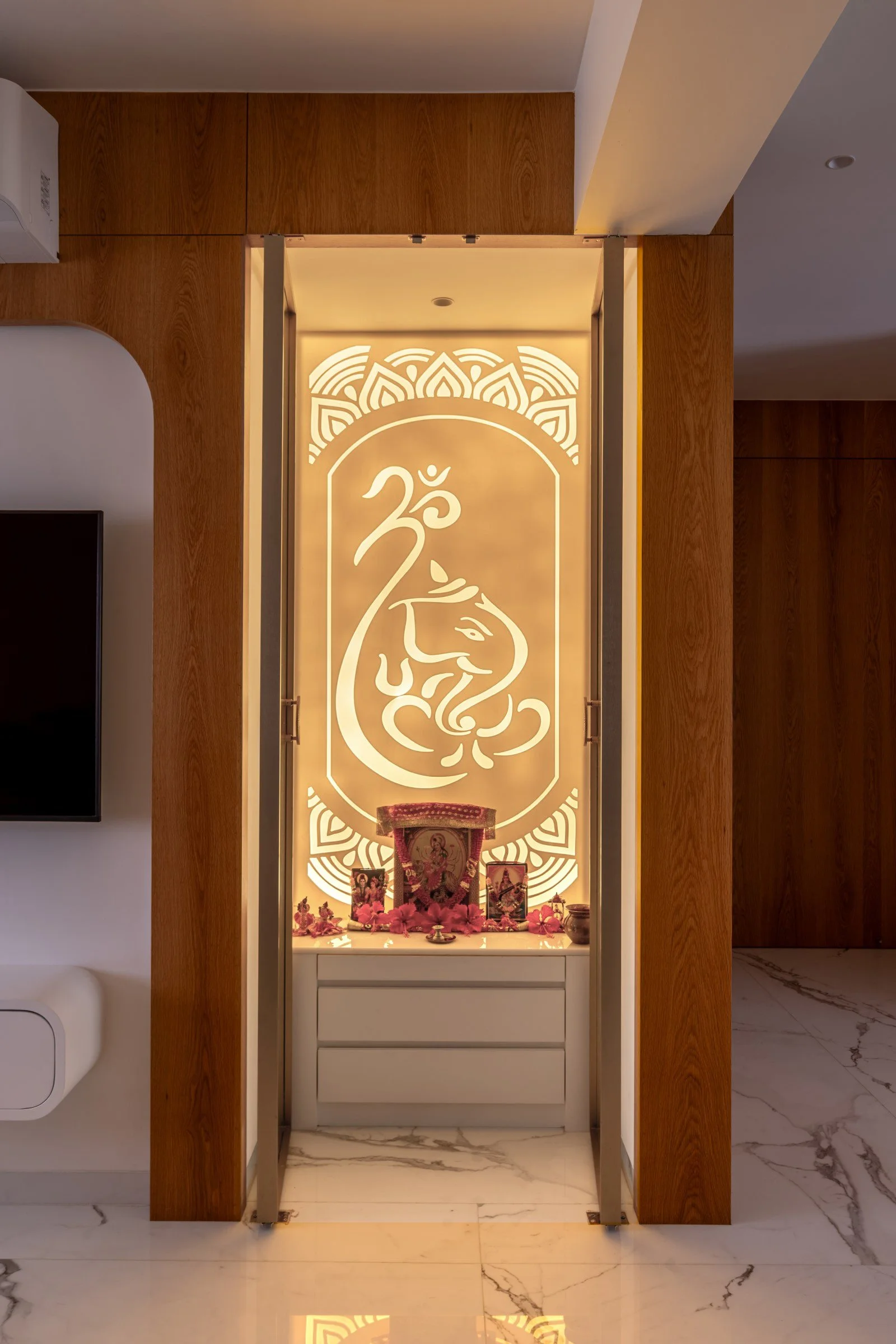
A CNC-cut panel behind the idols adds depth and pattern, and it can be backlit to create a soft glow. It is a popular way to give a simple mandir a rich look.
23. Backlit stone panel
A thin stone or onyx panel with light behind it creates a luminous backdrop. Use it sparingly and keep the rest of the design plain so the panel stands out.
24. Jali or wooden door
A door with a jali pattern lets light through and adds traditional character. For wooden doors, choose a design that matches the rest of your interior doors.
25. Glass door or open portal
A glass door keeps the pooja space visible and bright. An open portal, with no door at all, suits households that use the space frequently and prefer easy access.
How Big Should a Pooja Room Be?
A pooja room does not need much space, but the sizes have to suit the way your family prays. These are typical working dimensions for a small pooja room. Adjust them to your own idols before the carpentry is drawn.
Wall-mounted mandir or niche: about 2 to 3 feet wide, 9 to 12 inches deep and 2 to 3 feet tall. This fits one main deity, a few smaller idols and a lamp.
Corner unit: a footprint of roughly 2 by 2 feet, with angled sides so each idol has a clear view.
Cabinet or modern pooja unit: about 3 to 4 feet wide and 15 to 18 inches deep when drawers or storage sit below the mandir. Take it up to 6 or 7 feet tall if you want closed storage above.
Separate pooja room: a minimum of around 4 by 4 feet. A room of about 5 by 6 feet lets two or three people sit comfortably.
Floor space in front: keep 2 to 3 feet clear if you pray standing, and about 3 by 3 feet if you sit on a mat.
Height: place the main shelf so the idols sit at roughly chest height for standing prayer, and lower for seated prayer. Keep the ceiling at least 7 feet high, and avoid a beam directly above the mandir, which many Vastu guidelines advise against.
Measure your largest idol with its stand first. Then add 3 to 4 inches of clearance on each side and above it, plus about 6 inches in front for lamps and offerings. If space is very tight, a wall niche (idea 3) or a wall-mounted mandir (idea 1) gives you the most usable prayer area for the smallest footprint.
Readymade Mandir or Custom Pooja Unit: Which Should You Choose?
Most people weighing a pooja space start with one question: buy a readymade mandir or build one to fit the wall. Both work, and the right choice depends on your home and how long you plan to stay.
A readymade mandir costs less upfront, arrives ready to use and can move with you, which suits rented homes. The trade-offs are fixed sizes and finishes, a freestanding base that takes floor space, and a fit that may not match your idols or your wall. Build quality also varies a lot from one piece to the next.
A custom or built-in pooja unit is sized to your idols and your wall. It can include concealed lighting, storage and ventilation, frees up floor space and matches the rest of your interiors. It costs more, takes a few weeks to make and is fixed in place.
Choose readymade if you rent, expect to move soon or want the lowest cost. Choose custom if you own the home, are renovating or building, or have limited space. A middle option is to buy a readymade mandir and have a niche, shelf and lighting built around it.
Vastu Basics for Your Pooja Room
Many families follow Vastu guidance when placing the pooja space. These are commonly cited principles, and your own tradition or a Vastu consultant may advise differently for your home.
Direction: the north-east corner is widely considered the best location.
Idol placement: keep idols raised off the floor on a platform or shelf, and avoid placing them directly against a wall that is shared with a bathroom.
Spaces to avoid: under the staircase and inside the bedroom are usually avoided.
Facing: many followers prefer to face east or north while praying.
Cleanliness: keep the area tidy and free from clutter and storage that is unrelated to puja.
Lighting, Colour and Storage
Lighting. Warm white light, around 2700K to 3000K, suits a pooja space. Use a concealed strip or a small spot above the idols, and keep it dimmable if possible. Our post on lighting ideas for your living room covers layered lighting you can apply here.
Colour. White, cream, soft yellow and pale wood tones feel clean and bright. Add one accent such as brass, deep red or saffron rather than several.
Storage. A few drawers or a closed cabinet below the mandir keep agarbatti, matchboxes, oil, books and festival items out of sight.
Safety and ventilation. Place diyas on a stone or metal base, keep flammable fabrics away from the flame, and make sure incense smoke has somewhere to go.
Ceiling. In a separate pooja room, a simple ceiling with a soft cove light feels calm. See our guide to bedroom false ceiling design for ceiling options that work in other rooms too.
How Much Does a Pooja Room Cost?
A small pooja room typically costs between ₹10,000 and ₹50,000. The range is wide because the final figure depends on the size of the unit, the material (laminate and plywood cost far less than marble or solid wood), how much custom carpentry or carving is involved, and whether you add lighting, a back panel or a door. Larger or fully custom pooja rooms cost more, so ask for an itemised quote before you decide.
If the pooja room is part of a larger project, use our interior cost estimator for a first number across the whole home.
5 Pooja Room Mistakes to Avoid
Too little ventilation. Closed cabinets and incense without airflow leave smoke and odour in the room.
Placing the mandir behind or beside a screen. A TV or mirror directly facing the idols often feels out of place.
Poor lighting. A single bright ceiling light flattens the space, while warm layered light feels reverent.
Ignoring the idol sizes. Measure your largest idol, including the stand, before the carpentry is drawn.
Choosing material that stains easily. Light porous stone and unsealed wood absorb oil and soot quickly, so choose finishes that wipe clean.
How Neotecture Designs Pooja Rooms
We treat the pooja space as part of the home, not an afterthought. We start with your idols, your rituals and your preferred position, then draw the unit, lighting and storage together so the space feels natural from the first day.
If you are planning a pooja space as part of a larger home project, see our residential interior design service. If your layout is final and you want styling and finishing only, our interior decorator in Ahmedabad service can help, and our guide to living room design ideas and decor tips is a good place to plan the room around it. For a 3BHK, our 3 BHK interior designer in Ahmedabad page shows how we plan the whole home.
Conclusion
A good pooja room design in home comes down to a few decisions: where the mandir sits, how much space you can give it, and materials and lighting that suit your family’s daily rituals. A small wall niche or a simple cabinet can feel as complete as a full prayer room when the proportions are right and the surroundings stay calm. Start with your idols and your routine, choose one style and one or two materials, and plan the lighting before the carpentry is finalised.
If you would like help turning these ideas into a plan for your own home, speak to an interior designer in Ahmedabad who can design the pooja space together with the rest of your layout. Share your floor plan with the Neotecture team and we will suggest options that fit your space and budget.
FAQs
What is the best direction for a pooja room at home?
The north-east corner is the most commonly recommended location in Vastu guidance. If that is not possible, east or north are usually considered acceptable alternatives.
How do I design a pooja room in a small flat?
Use a wall-mounted mandir, a wall niche or a compact cabinet, and keep the surroundings plain. Good lighting and a clear backdrop make a small pooja space feel complete.
Is marble or wood better for a pooja room?
Marble is easy to clean and traditional, while wood is warmer and easier to carve. Many designs use both, with a stone base and a wooden frame.
Can a pooja room be in the hall or living room?
Yes. Many homes place the mandir in the living room as a unit beside the TV wall, an open alcove or a partition. Keep it visually distinct from the entertainment area.
Can I build a pooja room under the staircase?
It is physically possible if the ceiling height is comfortable, but many Vastu guidelines advise against it. Choose another spot if that matters to your family.
What lighting is best for a pooja room?
Warm white light, concealed above or behind the mandir, creates a soft, respectful look. Avoid harsh white light and keep diyas on a safe base.
Does a pooja room need a door?
Not necessarily. Open alcoves and portals are common, while glass or jali doors add privacy and keep dust out. Choose based on how often the space is used.
How much does a pooja room cost?
It ranges from a modest wall-mounted unit to a full custom room with stone work. Cost depends on size, material and carpentry detail, so ask for an itemised quote.